If you want to understand deer, start with their stomach. A whitetail’s entire life—its travel patterns, its bedding choices, its social habits—is wired around finding food that keeps it alive through every season. Not just any food. The right food.
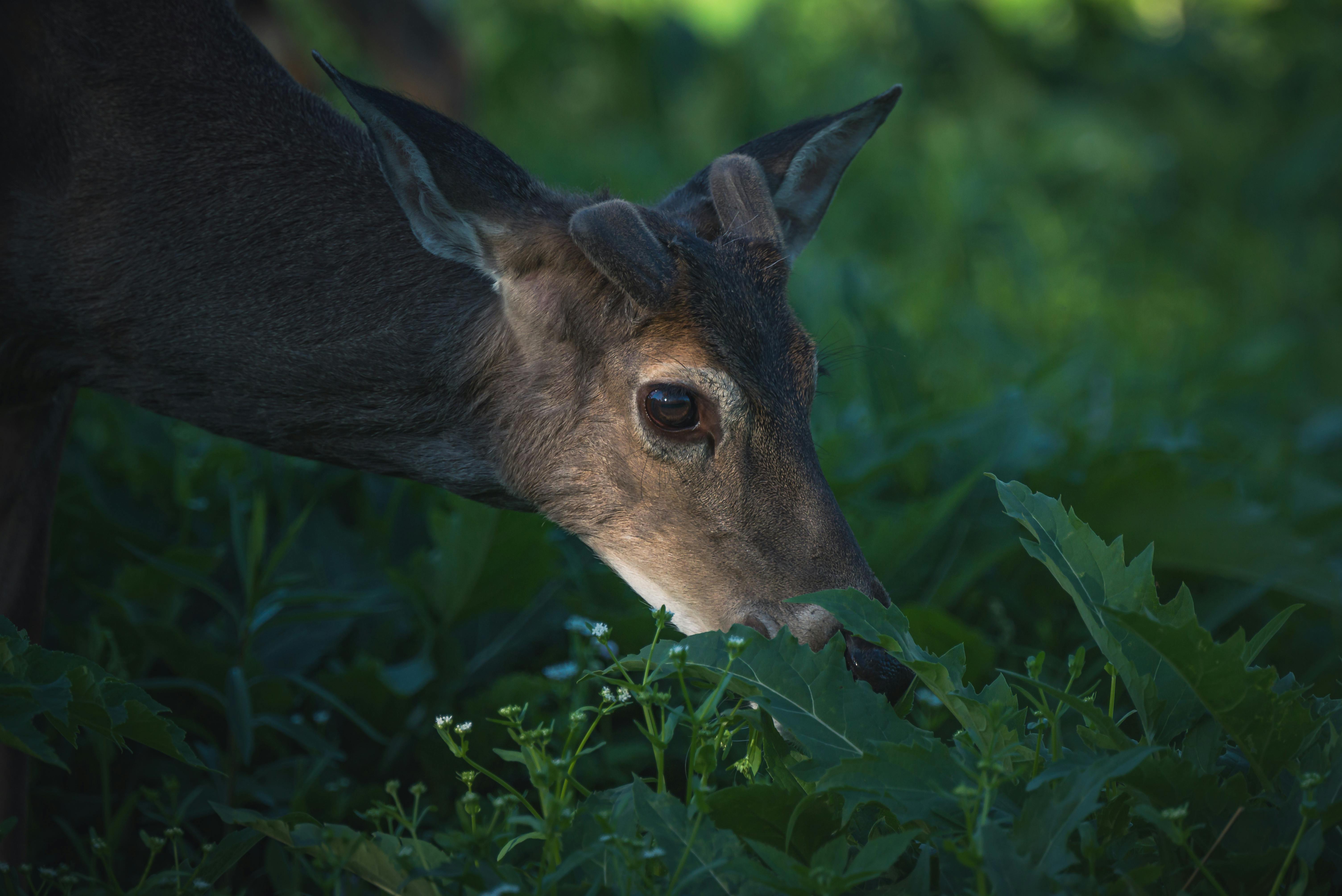
Hunters throw around the phrase “deer will eat anything,” but that isn’t true. Whitetails are picky, high-octane feeders built for digesting tender, nutrient-rich plants—not coarse forage like cattle or elk. Their narrow snouts, long tongues, and powerful salivary enzymes let them cherry-pick the very best bites the woods offer.
1. The Whitetail Diet: What Deer Are Built to Eat
Whitetails evolved to survive on foods that are easily digestible and nutrient dense. Their digestive system moves food quickly, which means they can’t live on mature grasses like cattle or moose. On poor habitat, deer have literally starved with stomachs full of low-quality forage — because they couldn’t extract enough nutrients fast enough.
The core components of a deer’s natural diet:
- Browse: leaves, stems, buds, twigs from woody plants
- Forbs: herbaceous broadleaf plants; highly nutritious
- Soft mast: berries, fruits
- Hard mast: acorns, nuts, seeds
- Mushrooms/lichens: short-term seasonal boosts
Over 85% of a whitetail’s year-round diet comes from browse, forbs, and mast. Everything else is a seasonal bonus.
Deer nibble from hundreds of plant species, but only a handful carry the bulk of their nutritional load. They “sample” often, always searching for the next high-quality mouthful.
2. Spring: The Season of Recovery
After winter, deer are nutritionally drained. Bucks are rebuilding muscle and preparing for antler growth. Does are recovering from winter stress and carrying fawns. Nutrition is life-or-death here.
What deer eat in spring:
- Fresh browse (especially buds and new growth)
- Protein-rich forbs like ragweed and goldenrod
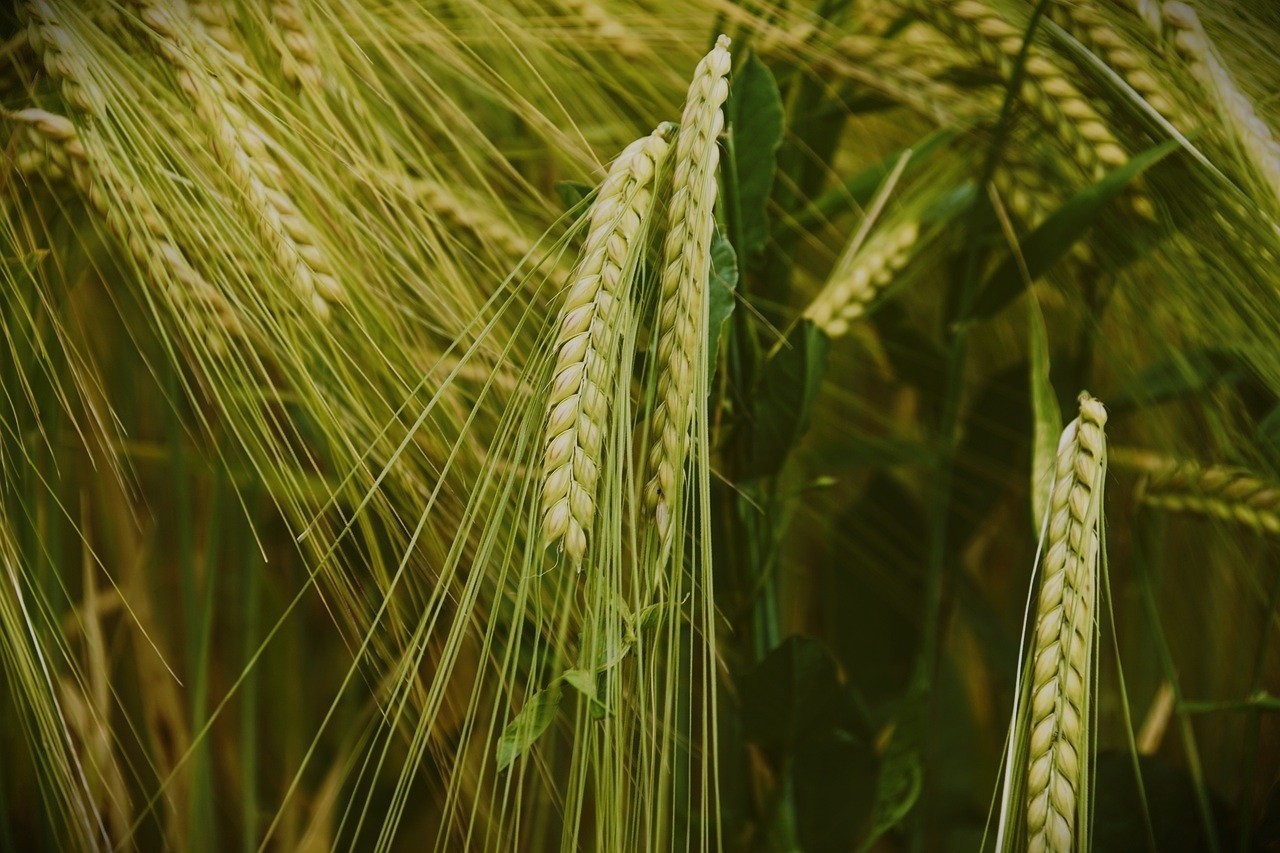
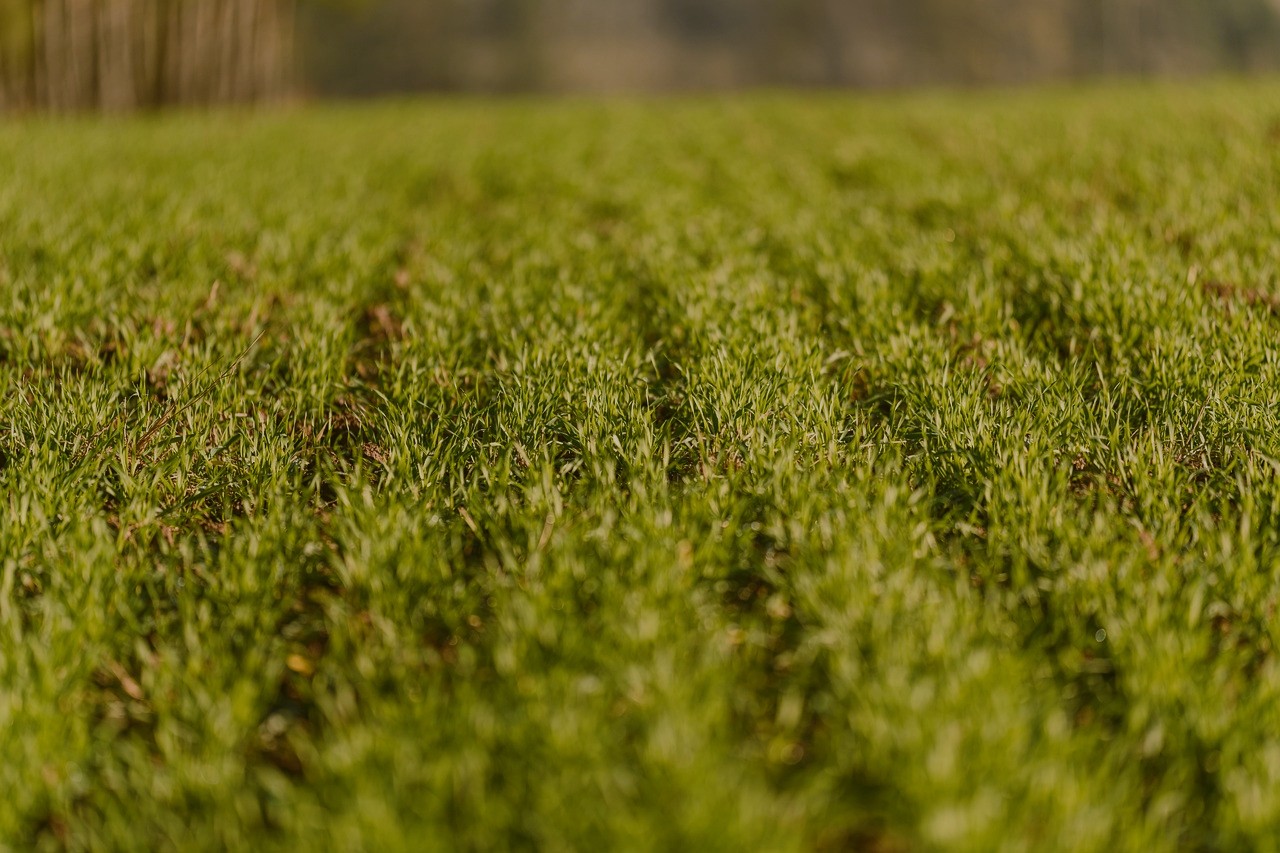
- Winter rye, clover, chicory
- New growth in cutovers and logging edges
3. Summer: High Protein, High Demand
Summer is the engine of antler growth and fawn development. Deer need protein — and lots of it. Natural browse and forbs dominate, but agricultural crops become major food sources where available.
Key summer foods:
- Forbs (the bulk of the diet)
- Woody browse in shaded areas
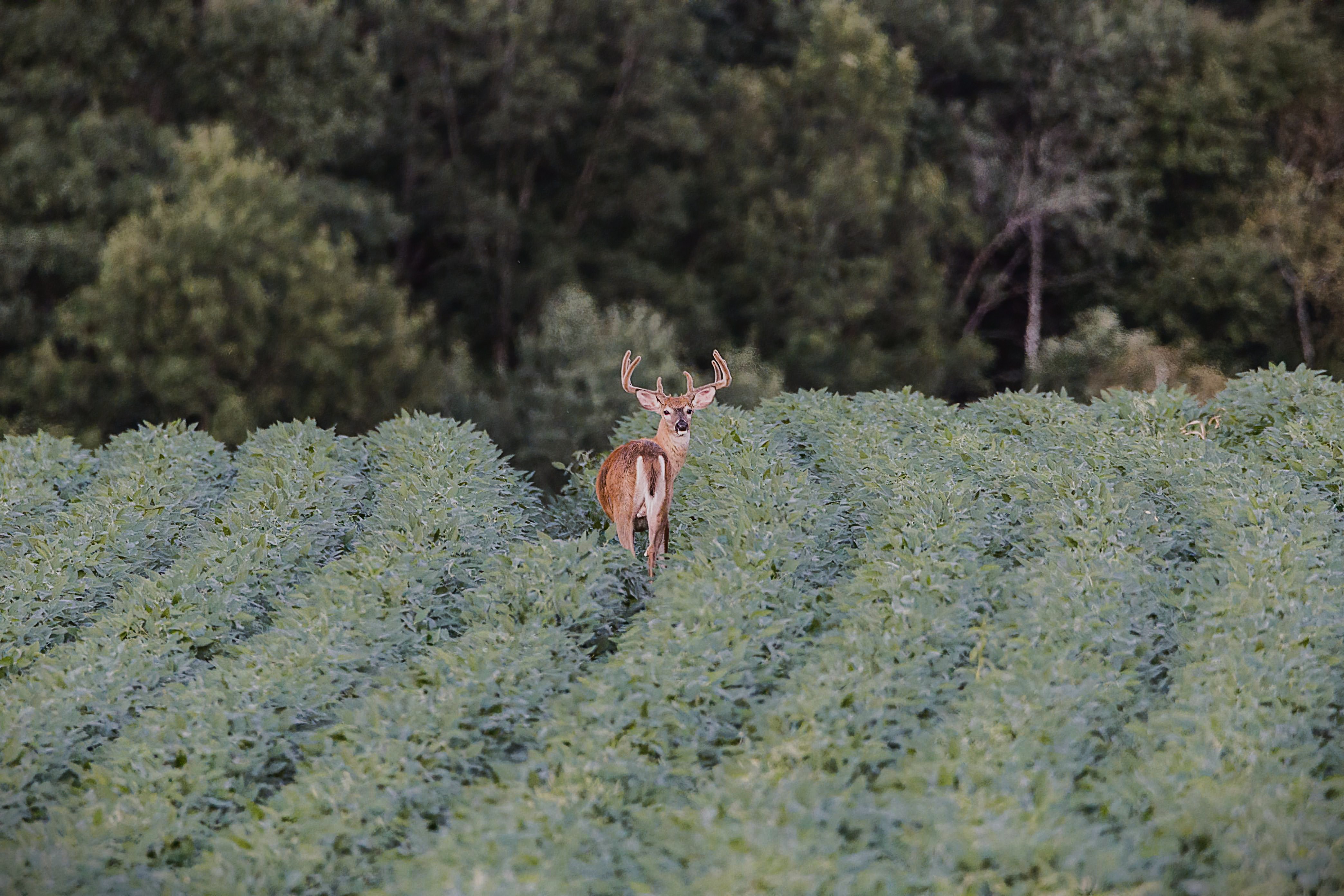
- Soybean leaves
- Alfalfa and clover
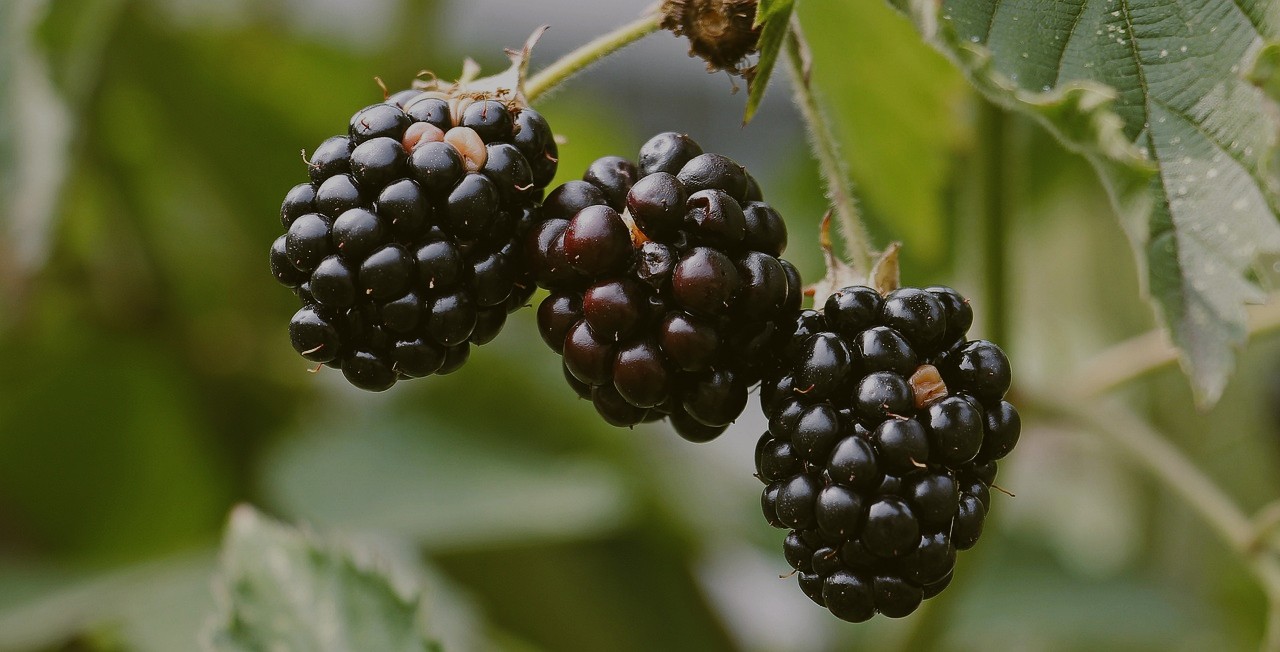
- Soft mast like blackberries, plums, mulberries
4. Fall: The Great Shift to Energy
Autumn is when the deer diet changes the fastest. Bucks are bulking for the rut. Does are restoring fat. Natural forages begin to dry up — and mast becomes the king of the woods.
Primary fall foods:
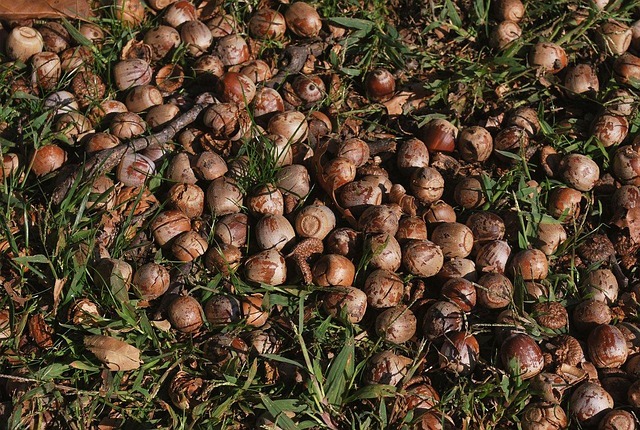
- Acorns: the #1 fall attractant across most of North America
- Beechnuts and hickory nuts
- Corn and residual grain
- Brassicas after the first frost
- Clover regrowth in cool evenings
- Apples, pears, persimmons, grapes
A single good red oak can pull every deer in a half-mile radius. Find the mast, and you’ll find the deer.
5. Winter: Survival Mode
When the woods go silent and the browse turns woody, deer shift gears. Protein takes a back seat to digestible energy. Food becomes scarcer, and deer home ranges shrink.
What deer rely on in winter:
- Woody browse (maple, sassafras, sumac, aspen)
- Evergreen leaves and buds
- Leftover crops (corn, beans)
- Turnips, radishes, sugar beets
- Mushrooms and lichens when available
6. Food Plots vs. Natural Food: What Matters Most?
Natural habitat feeds deer 365 days a year. Food plots are supplements — not replacements. A well-managed property can produce hundreds of pounds of native food per acre without turning a wheel on a tractor.
Why food plots still matter:
- Provide nutrition during seasonal stress periods
- Create predictable hunting locations
- Offer high-protein forage when natural foods dip
Variety is the key. One crop can’t carry a season. A good mix covers early season, rut, and winter:
- Clover + chicory (spring/summer)
- Soybeans + corn (summer/fall)
- Brassicas (late fall/winter)
- Cereal grains (rut + early winter)
What Deer Eat Isn’t Random — It’s Strategy
Deer don’t wander the woods hoping to “find something green.” Every movement they make is tied to the foods that fuel the season they’re in. Understanding that rhythm — the protein wave in summer, the mast wave in fall, the survival grind of winter — is the difference between hunting where deer were and hunting where deer are.
When you learn their food, you learn their patterns. When you learn their patterns, everything else starts falling into place: stand choice, timing, access, the whole game.
The woods are a buffet. But only a handful of items are ever on the menu. Know them, and the whitetail world opens up.