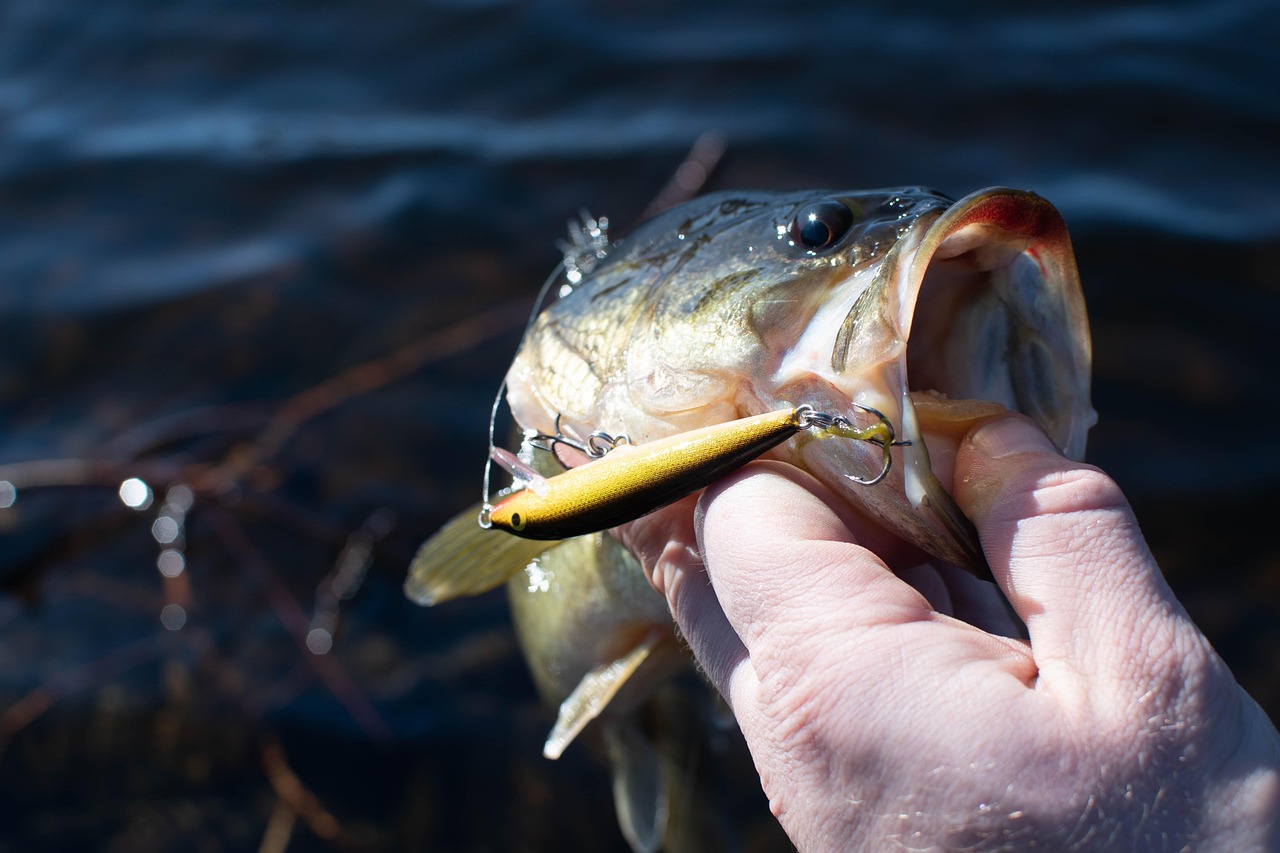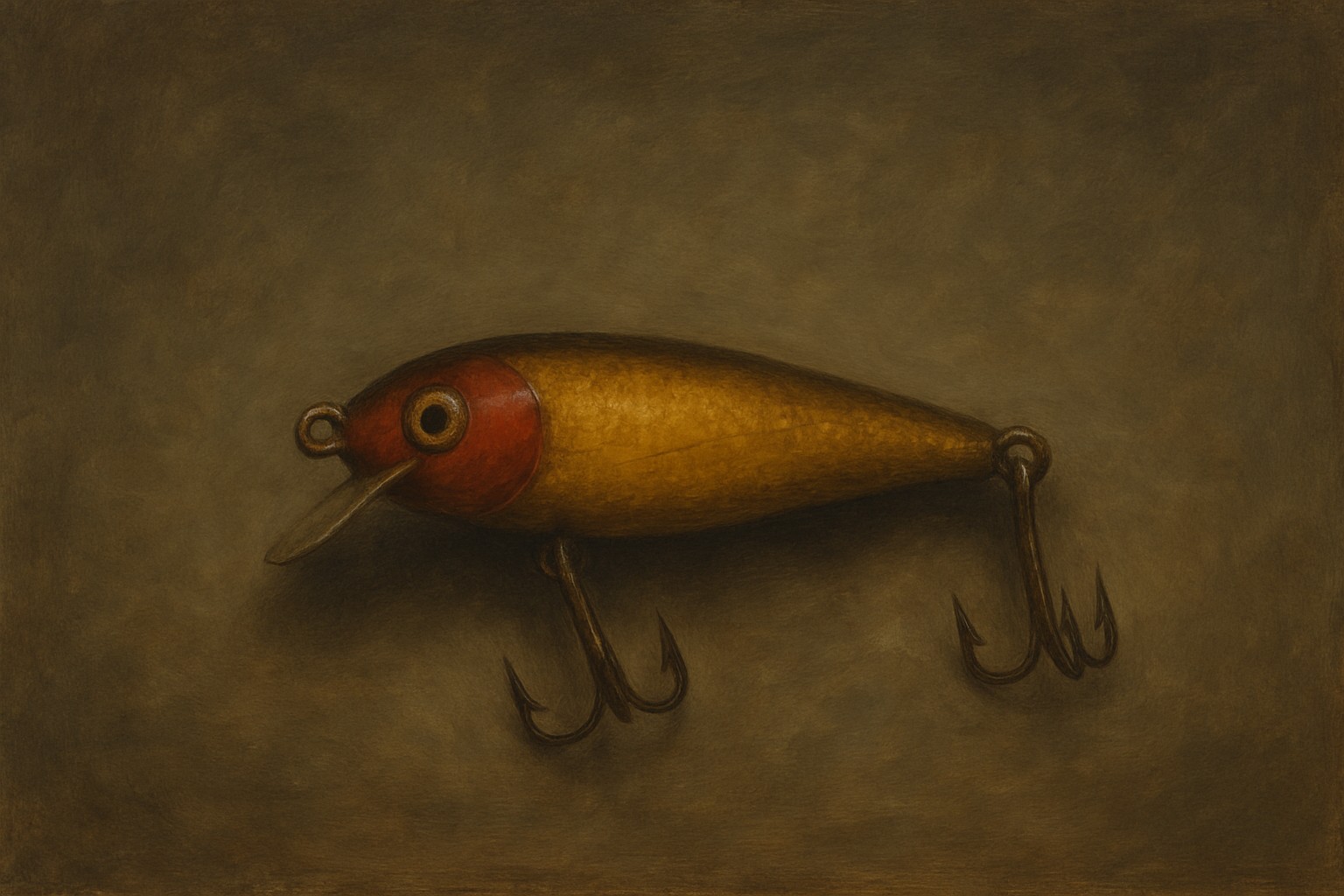
Behind every crankbait wobble, paddle-tail thump, or jerkbait glide is a world of physics— pressure waves, turbulence signatures, lateral line cues, and flow disruptions that fish evolved to read long before humans understood them.
Whether you’re chunking baits for largemouth in a farm pond or throwing big swimbaits for smallmouth in clear rivers, understanding lure hydrodynamics instantly levels up your fishing. Fish don’t “see” your lure first—they feel it through water long before it enters their visual field.
The Three Detection Systems Every Predator Uses
- Lateral Line: Detects low-frequency vibration & turbulence signatures.
- Inner Ear: Tunes into mid-frequency vibration and rattles.
- Vision: Flash, color contrast, and micro-movement in the final attack window.
If your lure speaks to all three systems at the right time, you’re in business.
The Hydrodynamic Footprint: A Lure’s “Identity” in Water
Every lure creates a unique pattern of pressure waves—its hydrodynamic footprint. To a bass or walleye, that signature is as recognizable as handwriting.
- Tight-wobble baits = forage fleeing in open water.
- Wide-wobble baits = distressed or wounded prey.
- Straight-tail swimbaits = subtle, natural cruising prey.
- Paddle-tails = rhythmic thump mimicking baitfish push-water.
Predators don’t need to see the lure—they interpret these signatures through their lateral line, which is sensitive enough to detect a minnow’s tailbeat from several feet away.
Test This Yourself
Pull different lures through a shallow clear section of river. You’ll see pressure waves rolling off them like ripples from a boat wake.
Vibration: The Language of Predatory Fish
Vibration isn’t just noise—it’s information. Fish read vibration like we read tone of voice.
- Low-frequency vibration (slow thump) = confident forage, easy meal.
- Mid-frequency vibration = panicked forage or rapid tailbeats.
- High-frequency vibration = injured fish or unnatural mechanical noise.
Why Some Days Subtle Wins
In cold water or pressured lakes, predators shut down high-frequency chaos. They want clean, minimal flow disruption—think finesse swimbaits, marabou jigs, and hair jigs.
Displacement: How Much Water a Lure “Pushes”
Water displacement is the “kick” of a lure. High-displacement baits push more water and call predators from farther away.
- Big swimbaits = heavy displacement, long-range detection.
- Flat-sided crankbaits = sharp displacement pulses.
- Finesse plastics = low displacement, perfect for spooky fish.
Imagine running your hand through water—straight is subtle, cupped is loud. Lures work the same way.
Flow Separation: Why Some Lures Hunt or Kick Erratically
When water stops flowing smoothly across a lure’s surface and begins to break away, the lure “hunts”—a desirable erratic action.
Causes of Flow Separation
- Bill angle or size (crankbaits).
- Body taper and contour.
- Soft bait tail stiffness.
- Retrieve speed exceeding laminar flow stability.
Fish key in on sudden irregularities because real prey rarely swims perfectly straight.
Flash Dynamics: The Physics of Light Underwater
Water eats light, fast. Red disappears first, then orange, then yellow.
- Metallic flash = long-range visual cue, especially on sunny days.
- Matte colors = low-flash realism for clear-water pressured fish.
- High-contrast patterns = best for river smallmouth and aggressive fish.
Scientist Tip
In stained water, contrast beats color. In clear water, natural beats everything.
Putting It All Together: Choosing the Right Lure by Water Conditions
1. Clear Water
- Subtle vibration.
- Low displacement.
- Natural flash and movement.
2. Stained Water
- Higher displacement.
- Strong vibration (thump).
- Bold contrast.
3. Cold Water
- Ultra-tight wobble.
- Minimal flash.
- Slow retrieve—maximize the “easy meal” profile.
4. Aggressive Feed Windows
- Erratic baits.
- High-frequency vibration.
- Sudden directional changes.
Water Doesn’t Lie — Fish Respond to Physics
Once you start seeing lures as hydrodynamic tools rather than pieces of plastic and metal, your entire approach to fishing changes.
You’ll match lure action to water temperature, clarity, predator mood, and forage type— and you’ll stop guessing why some days fish respond and some days they don’t.
From now on, every cast becomes an experiment in physics— and the water will always tell you the truth.