Bass fishing isn’t complicated — but the fish will convince you otherwise if you let them. At its core, catching bass comes down to understanding two things: where they live and why they eat.
Once you learn how to read water, pick the right lure, and feel what’s happening on your line, bass fishing goes from “luck” to something much more predictable — almost repeatable.
The Bass Mindset: Why They Eat What They Eat
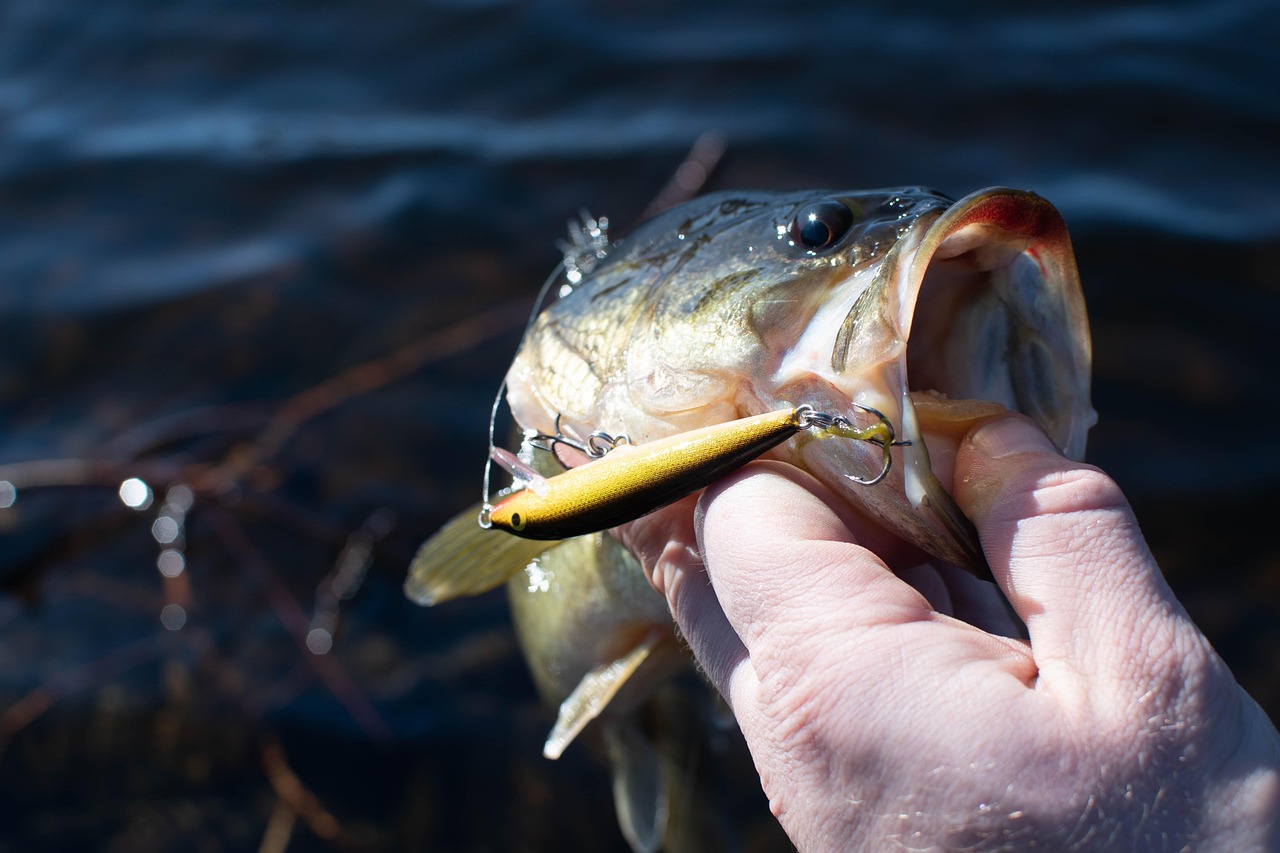
Bass are ambush predators built for short bursts of violence. Wide mouths, explosive acceleration, and a lateral line tuned to vibration make them deadly hunters — and extremely good at detecting lures that look wrong.
They don’t eat because a lure looks pretty in the package. They eat because something in the water looks weak, distracted, or like it’s about to die. Your whole job as an angler is to send those signals down the line.
Bass aren’t looking for perfection — they’re looking for weakness. Your lure doesn’t need to be a replica. It just needs to look alive.
Where Bass Actually Live
If you throw at random water, you’re gambling. Bass relate to edges — places where one thing turns into another: deep to shallow, rock to sand, light to shade, clean bottom to weeds.
High-percentage places to start
- Weed edges with a clean inside or outside line
- Submerged wood: laydowns, stumps, brush piles
- The shady side of docks and overhanging trees
- Creek mouths where cooler water flows in
- Points with rock-to-sand transitions
The Only 3 Rod/Lure Styles Beginners Need
You don’t need a deck full of rods to start bass fishing. Three basic styles will let you cover almost every depth and mood a bass can throw at you.
1. Texas Rig
The most reliable system ever created: soft plastic + weight + hook. Crawl it, hop it, or drag it along the bottom.
- Berkley Power Worms (affiliate-friendly)
- Tungsten bullet weights (1/8–1/4 oz)
2. Spinnerbait
A search bait that covers water fast and triggers reaction strikes along weed edges, riprap, and windy banks.
3. Topwater Popper
The most exciting bite in bass fishing, especially at first and last light when bass are hunting upward.
How to Read Water Like a Bass Pro
Bass react to light, wind, temperature, and bait movement. You don’t need to know everything — just enough to stack the odds.
- Wind-blown banks: often better because food gets pushed there
- Calm pockets: good for spooky fish on bright days
- Incoming water: usually cooler and more oxygenated
- Shade lines: act like invisible structure bass can pin prey against
The Retrieval Keys Beginners Miss
Most new anglers underestimate retrieve. They cast out, reel in, and hope. Meanwhile, good anglers are constantly changing speed, cadence, and depth.
- Cold water → slow retrieve, closer to bottom
- Warm water → speed up and cover water
- Muddy water → vibration and flash are king
- Clear water → natural colors and subtle action
The difference between a new angler and a good angler is simple: one reels… the other communicates through the line.
Beginner Bass Gear That Actually Works
You don’t have to overspend to start strong. A couple of durable, forgiving setups will carry you a long way, and they’re easy to recommend as affiliate picks.
Rod and Reel Combos
- Ugly Stik GX2 Medium Spinning Combo: tough, affordable, and perfect for bank fishing
- Lew’s Mach 2 Baitcaster: a smooth stepping stone into baitcasting without breaking the bank
Core Lures to Recommend
- Soft plastic worms for Texas rigs
- 3/8 oz spinnerbaits in white or chartreuse/white
- Topwater poppers in bone, shad, or frog patterns
The Fight: Hooking and Landing Bass
New anglers lose more fish from panic than bad gear. The moment a bass eats, everything in your body wants to overreact. You don’t need to wrestle them — you just need to stay steady.
- Set the hook with authority — bass have thick mouths
- Keep steady pressure and a bend in the rod
- Don’t reel against the drag — let it work
- Guide the fish sideways, not straight up
- Use a net or lip the fish when it’s tired, not in full power mode
Bass Fishing Is Skill, Not Luck
Once you understand how bass think, where they live, and how they react to lures, the whole sport changes. You stop guessing and start predicting. Trips feel less like coin flips and more like problem-solving on the water.
You can get there with a couple of honest setups, a handful of proven lures, and time on the water — not a closet full of expensive gear.